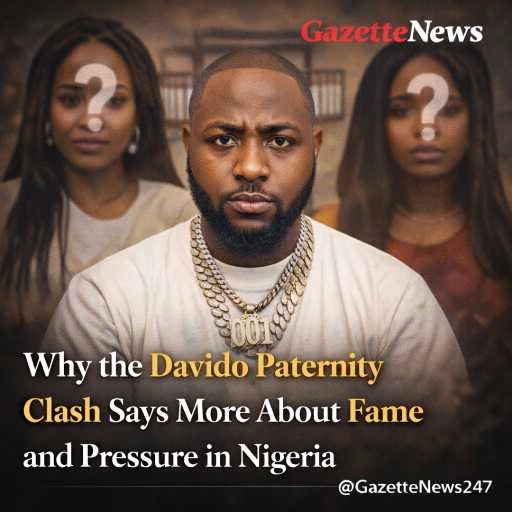
The renewed clash between Davido and Ayo Labinjoh over the paternity of a young girl is not just another celebrity scandal. It is a revealing story about how fame, social media, and public pressure collide in Nigeria, turning deeply personal family disputes into national conversations and emotional battlegrounds.
What Is Really Going On
At the centre of the controversy is a child, Anuoluwapo, whose mother has again asked Davido to take a DNA test to confirm paternity. Labinjoh says years of online bullying have affected her daughter and wants clarity. Davido, on the other hand, insists multiple DNA tests have already shown he is not the father and has publicly told her to stop contacting him.
The dispute has spilled onto Instagram and X, with emotional posts, leaked chats, and harsh language exchanged in full public view. What should have been a private legal and medical process has become a viral spectacle, watched and judged by millions.
Why This Matters Beyond Davido
This saga shows how fame changes the meaning of personal conflict in Nigeria.
For a regular family, a paternity dispute would be handled quietly in court or through mediation. For a global star like Davido, every accusation becomes a headline, every reply becomes content, and every child involved becomes a subject of public opinion.
Social media has turned DNA into drama and identity into entertainment. Instead of resolution, the platforms reward outrage, sides, and screenshots.
The Pressure Fame Creates
Davido’s reaction, blunt and defensive, reflects the pressure celebrities face when personal issues are dragged into the spotlight. Repeated accusations threaten reputation, brand partnerships, and public image. At the same time, the mother’s persistence reflects another pressure, the fear that without public attention, a powerful figure will never respond.
Both sides are operating under intense public scrutiny, where silence is seen as guilt and response is seen as admission.
What This Says About Nigeria’s Celebrity Culture
This clash exposes a deeper problem. Nigerians increasingly use social media as a court of law. Allegations are tried online, verdicts are passed in comment sections, and children become collateral damage.
The child’s wellbeing is being debated by strangers. Her identity is being argued over by fans. This is the human cost of turning private disputes into viral content.
Why the Real Issue Is Resolution, Not Drama
Whether Davido is the father or not, the solution is simple and serious. A transparent, independent DNA test supervised by neutral authorities and followed by a binding legal agreement.
Anything less keeps the cycle of accusation, denial, and online warfare alive.
The Bigger Lesson
The Davido paternity clash is not just about who is telling the truth. It is about how Nigeria treats fame, pressure, and private pain.
When celebrity becomes a shield and social media becomes a weapon, children lose their right to quiet dignity. And until disputes are handled with maturity and proper legal process, fame will continue to turn personal problems into national drama.