
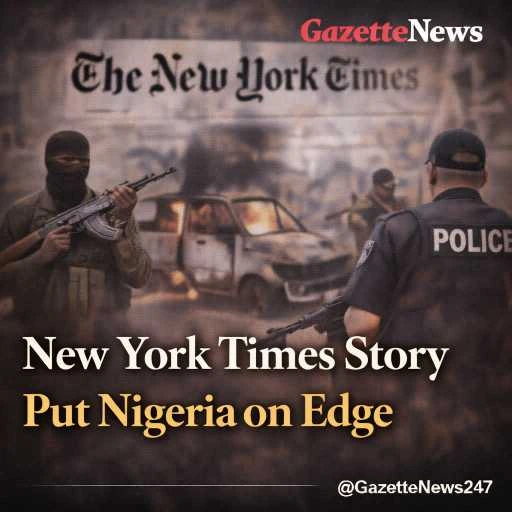
A single headline from a global media outlet has triggered anger, fear, and deep debate in Nigeria, raising questions about journalism, national security, and the power of international narratives.
The controversy began after The New York Times published a story headlined “The Screwdriver Salesman Behind Trump Strikes in Nigeria.” The article linked Emeka Umeagbalasi, a Nigerian civil society advocate, to U.S. military actions in Nigeria, suggesting his claims influenced American decision-making.
In Nigeria, the reaction was immediate and intense.
Why the Headline Struck a Nerve
Nigeria is a country where ethnicity, religion, and regional identity already sit on edge. Reducing complex U.S. military actions to the words of a single Nigerian citizen, identified by his place of origin and profession, was seen by many as reckless.
Critics argue that the framing turned an individual into a scapegoat and ignored broader evidence, institutions, and processes that typically inform U.S. foreign and military policy. For many Nigerians, the story felt less like investigation and more like insinuation.
Media Backlash at Home
On Arise TV, journalist Rufai Oseni openly challenged the report, describing it as misleading and dangerous. He argued that U.S. decisions on Nigeria were not based on one activist’s claims but on extensive testimonies and intelligence.
Oseni pointed to formal hearings before the U.S. Congress, including testimonies by Bishop Wilfred Anagbe of the Makurdi Catholic Diocese and other witnesses, including survivors of violent attacks in Benue State. These accounts, he stressed, were sworn testimonies, not informal advocacy claims.
To frame the issue around a “screwdriver salesman,” Oseni said, undermined the credibility of both journalism and the U.S. intelligence process.
Security and Social Risks
Former presidential spokesman Reuben Abati warned that the story went beyond poor framing and entered dangerous territory.
According to Abati, the U.S. intelligence system does not rely on a single source when making military decisions. Suggesting otherwise, he argued, insults both Nigeria and the United States.
More importantly, Abati warned of the domestic fallout. Linking a man from Nigeria’s South-East to airstrikes in the North risks inflaming regional and religious tensions in an already fragile environment.
In his view, such narratives do not just misinform; they destabilise.
Questions of Journalistic Responsibility
A key issue raised by critics is accountability. If a global outlet amplifies a claim with international consequences, observers argue that the burden lies on the publication to show rigorous verification.
Abati and others insist that if the story was thoroughly checked, the framing failed. If it was not, then the publication amplified a claim without sufficient due diligence. Either way, they say, the damage has already been done.
Public Reaction and Political Voices
The backlash extended beyond television studios. Former senator Shehu Sani described the report as tragic and shameful, questioning how an alleged unverified claim could influence U.S. lawmakers and intelligence agencies.
For many Nigerians, the episode reinforced long-standing concerns about how African stories are told by global media—often simplified, personalised, and stripped of broader context.
Why It Matters
This controversy is not just about one article or one individual. It highlights how international reporting can shape perceptions, fuel tensions, and create real-world consequences far from the newsroom.
In a country like Nigeria, where words can deepen fault lines, the responsibility of global journalism carries extra weight. The debate sparked by the New York Times story is ultimately about who controls narratives, how power is framed, and what happens when complex realities are reduced to a single, explosive headline.