
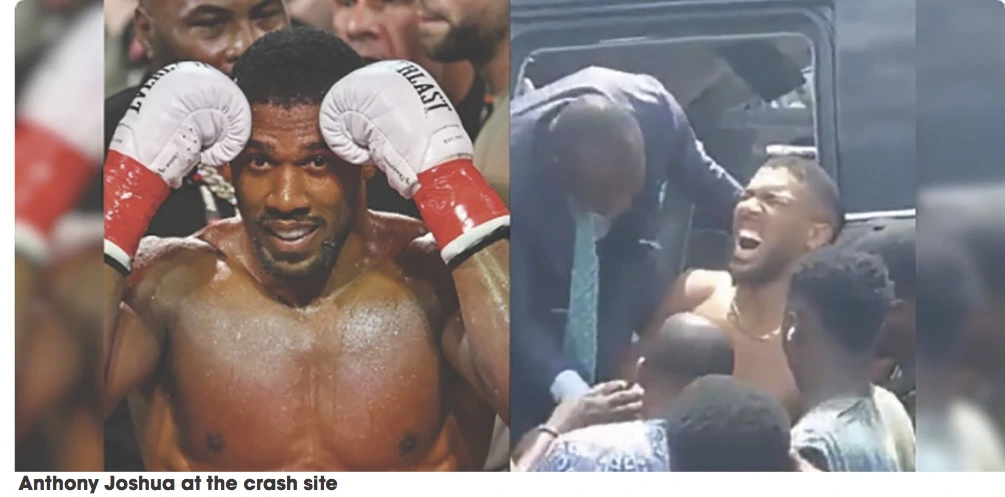
Nigeria — A court ruling following a road crash linked to a convoy associated with Anthony Joshua has shifted attention from celebrity news to everyday road safety realities. For millions of Nigerians who travel highways daily, the case raises a simple question: will traffic laws finally protect ordinary lives?
Lead: beyond the headline
For most Nigerians, road crashes are not rare events seen on social media. They are lived experiences. Bus passengers grip seats in fear. Families wait anxiously for travellers to arrive. This ruling matters because it suggests that unsafe driving can lead to real consequences, regardless of who is involved.
What happened
Authorities investigated a serious highway crash involving a vehicle connected to a private movement linked to Anthony Joshua. Road safety officials identified violations under Nigeria’s traffic regulations. Investigators concluded that the incident met the legal standard for prosecution.
A court later ruled that the driver involved should face charges under existing traffic and criminal laws. Officials stated that the case followed standard investigative procedures. No special exemptions were applied. The ruling moved the case from public discussion into the formal justice system.
Why this feels different
Nigeria records road crashes every day. Many never make headlines. Victims are often traders, students, drivers, or families travelling between cities. In most cases, investigations end quietly. Court cases rarely follow.
This ruling feels different because it happened publicly. Nigerians watched authorities act where silence is common. That visibility matters. It sends a signal that traffic laws are not symbolic documents. They can be enforced.
For the average driver, enforcement credibility influences behaviour. When speeding or reckless driving seems consequence-free, risks increase. When consequences appear real, caution improves. Even small behavioural changes save lives over time.
The human cost of weak enforcement
Road crashes are not statistics to families who lose breadwinners. A trader killed on a highway leaves children without school fees. A commercial driver injured loses income immediately. A survivor with permanent injuries faces lifelong medical costs.
Weak enforcement compounds these losses. It allows dangerous habits to persist. Overloaded buses, tired drivers, and unsafe overtaking become routine. When no one is held accountable, families feel abandoned by the system.
This ruling does not erase past failures. But it shows that accountability is possible. That alone restores some public confidence.
What it means for enforcement officers
The Federal Road Safety Corps operates under challenging conditions. Officers patrol long highways with limited resources. They face public resistance and political pressure. Consistent enforcement is difficult.
High-profile cases, however, strengthen their authority. When courts support investigations, officers gain institutional backing. It becomes easier to insist on compliance. Drivers are less likely to argue that rules do not matter.
The ruling may also improve documentation standards. Stronger evidence collection supports prosecutions. Over time, this professionalises traffic enforcement.
Infrastructure still shapes behaviour
Human error does not occur in isolation. Many Nigerian highways combine heavy trucks, buses, and private cars without clear separation. Broken-down vehicles often lack warning signs. Night driving remains dangerous due to poor lighting.
For a tired driver, a poorly marked obstacle becomes deadly. Enforcement alone cannot fix this. Safer roads require investment. Clear shoulders, reflective markings, and rest areas reduce risk before mistakes occur.
The ruling indirectly highlights these issues. It reminds policymakers that drivers operate within systems designed by government decisions.
Who is affected most
Commuters are the most exposed. They depend on drivers they do not control.
Commercial drivers face stricter scrutiny but benefit from safer roads.
Transport businesses may need better safety training and monitoring.
Families bear the emotional and financial cost when crashes occur.
Young people travelling for school or work face daily uncertainty on highways.
These groups rarely influence policy debates. Yet they carry the consequences of inaction.
Why celebrity cases matter, cautiously
Celebrity involvement draws attention. It creates pressure. But it can also distort priorities. Road safety should not require famous names to function.
The lesson here is institutional, not personal. Systems must work quietly and consistently. This case should become routine, not exceptional. Every fatal crash deserves the same seriousness.
If enforcement only improves when cameras are watching, trust will fade again.
What happens next
The legal process will continue according to Nigerian law. Outcomes may include penalties defined by statute. More importantly, the case sets a reference point.
Safety advocates expect renewed discussion around speed enforcement. Policymakers may revisit funding for patrols and emergency response. Technology-based monitoring could re-enter policy conversations.
Public expectations will also shift. Drivers may think twice before speeding. Transport companies may review driver behaviour. Small changes accumulate.
Why this matters to ordinary Nigerians
Every safe journey is a quiet success. Nigerians do not ask for perfection. They ask for fairness. They ask that rules protect lives, not just exist on paper.
This ruling suggests that accountability is possible. It does not guarantee reform. But it opens a door. Whether institutions walk through it will define future safety outcomes.
For now, the meaning is clear. Road safety is not abstract policy. It is about whether people get home alive.