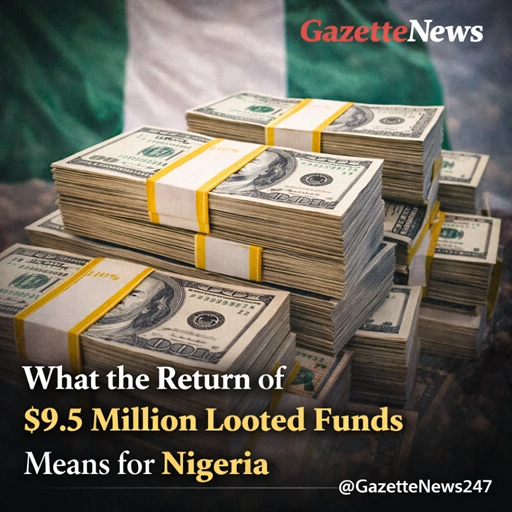
Nigeria is getting back $9.5 million once stolen and hidden abroad. The money is coming home after years of legal work, and it is meant for public infrastructure. For many Nigerians, the real question is simple: Will this finally make life better on the ground?
What Actually Happened
The Federal Government reached an agreement with authorities in Jersey, where the funds had been frozen after corruption investigations. Courts overseas ordered the money forfeited, clearing the way for its return to Nigeria.
This time, the funds are not just going back into general government accounts. They are tied to specific public projects. One key project mentioned is the Abuja–Kano Road, a major route used daily by thousands of people.
Why Nigerians Are Paying Attention
Many corruption cases end with big announcements but little change. That is why this recovery feels different. The money has a clear destination, and people can point to a road they know, use, and complain about.
Bad roads cost Nigerians time and money. They damage vehicles, slow down trade, increase accident risks, and push up food prices. Even though $9.5 million is not huge by national standards, it can fix dangerous sections, speed up ongoing work, or prevent further delays if used properly.
Who Stands to Benefit
Everyday road users are first in line. Drivers, bus operators, and commuters could see safer journeys and shorter travel times. Traders moving goods between the north and the capital may face fewer breakdowns and lower transport costs.
Communities along the route also matter. Good roads improve access to markets, hospitals, and schools. When a major highway works, local economies feel it quickly.
What This Says About Fighting Corruption
The recovery shows that stolen money is not always lost forever. With persistence and international cooperation, it can be traced and returned.
But recovery is only half the job. Nigerians now expect openness. They want to know when the money arrives, how it is spent, and who is checking the work. Without updates and clear records, trust fades fast.
What Happens Next
Attention now shifts to implementation. Agencies handling finance, justice, and public works must show timelines, progress reports, and spending details. People will judge success by what they see on the road, not by press statements.
The Bigger Meaning
This is more than a cash return. It is a test of credibility. If recovered funds turn into safer roads and visible progress, confidence in public institutions grows. If not, skepticism deepens.
For many Nigerians, the hope is simple: that stolen money coming home finally works for the people it was taken from.