

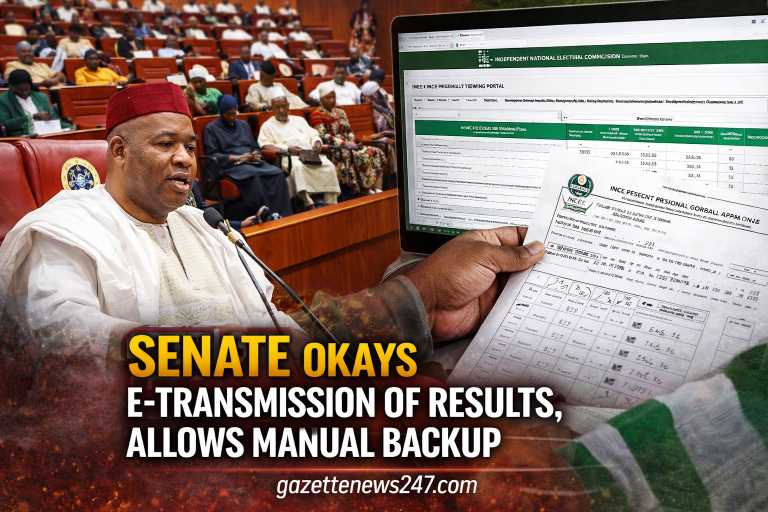
Nigeria’s Senate has taken another step in the long debate over how election results should be transmitted. Lawmakers approved electronic transmission of results to INEC’s portal, but with an important condition that has sparked fresh controversy.
Here is what the decision actually means, beyond the headlines.
What did the Senate approve?
During an emergency plenary session, the Nigerian Senate agreed that results from polling units can be transmitted electronically to the Independent National Electoral Commission Result Viewing Portal, known as IReV.
However, senators stopped short of making electronic transmission compulsory. They also rejected real-time uploading of results as votes are counted.
Why is manual collation still allowed?
The amended provision allows manual result sheets to serve as a backup. If electronic transmission fails due to network or communication problems, the physical result form, known as Form EC8A, becomes the primary document for collation and declaration.
Lawmakers said this was necessary to reflect Nigeria’s uneven network coverage and technical limitations in some areas.
How the process is expected to work
Under the new wording:
- Voting and documentation must first be completed
- Results are recorded on Form EC8A
- The presiding officer then uploads the result to IReV
- If upload fails, the signed paper form is used for collation
This approach introduces a mixed system rather than full digital transmission.
What Senate leaders said
Senate President Godswill Akpabio defended the amendment, saying it corrected an earlier decision and accounted for real-world challenges.
He urged senators who disagreed with the clause to raise formal objections instead of arguing verbally on the floor.
According to him, the amendment simply recognises situations where technology may fail and provides a legal fallback.
Why the decision is controversial
Critics argue that allowing manual collation weakens transparency. Opposition figures and political parties say the clause could open the door to manipulation, especially in closely contested elections.
Supporters, on the other hand, say a total reliance on technology could disenfranchise voters in areas with poor network access.
Why this matters ahead of future elections
The way results are transmitted has become one of the most sensitive issues in Nigerian elections. Past disputes over delayed uploads, missing results, and manual collation have fueled legal battles and public mistrust.
This Senate decision signals that Nigeria is moving toward digital transmission, but not yet ready to abandon paper entirely.
The key takeaway
Electronic transmission of results is now recognised in law, but it is not absolute. When technology works, results go online. When it does not, paper takes over. That balance is at the heart of the current debate and will likely shape future election disputes.
More political reactions are expected as the amendment moves closer to becoming law.