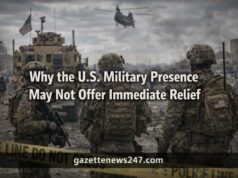

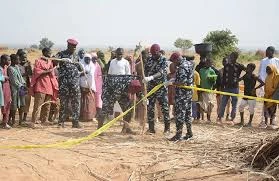
Sokoto State, Nigeria — Recent US-backed airstrikes targeting armed groups in parts of Sokoto State have raised quiet but serious safety concerns for civilians. Beyond the immediate military objectives, unexploded debris and weapon remnants now pose risks to farmers, children, and entire rural communities living near strike locations.
Lead: what this means for ordinary people
For residents of Sokoto’s border communities, life already carries uncertainty. Farming, herding, and trading happen alongside insecurity. Airstrikes may weaken armed groups, but they also leave behind debris that does not disappear when aircraft leave the sky. Civilians face danger long after the explosions stop.
What happened
Security operations involving Nigerian forces, supported by foreign intelligence and logistics, recently carried out airstrikes against suspected armed groups in parts of Sokoto State. Officials described the strikes as precision operations aimed at disrupting criminal networks operating near rural settlements and border routes.
While authorities focused on operational success, residents later reported scattered metal fragments and damaged ground in nearby fields and footpaths. Such debris can include unexploded ordnance or unstable weapon remnants. These materials are often invisible threats, especially in farming areas where people work barefoot or use hand tools.
Why debris is dangerous
Airstrike debris is not ordinary scrap metal. Some fragments can still contain explosive components. Others may detonate when disturbed. Even small remnants can cause serious injury if handled or stepped on.
Children are especially vulnerable. Shiny metal pieces can appear harmless or attractive. Farmers clearing land may unknowingly strike buried fragments with hoes or ploughs. Herdsmen moving livestock may trigger explosives along grazing paths.
Globally, post-strike debris has injured civilians long after conflicts fade. The danger is not theoretical. It is a documented risk in conflict-affected regions.
Why this matters in Sokoto
Sokoto’s rural economy depends heavily on land use. People farm, fetch firewood, and graze animals daily. Many communities lack clear communication channels with security agencies. When strikes occur, residents may not receive guidance on safe zones or restricted areas.
Unlike urban areas, rural villages rarely have emergency response units or bomb disposal teams nearby. If an accident happens, medical help may be hours away. This increases the likelihood of fatalities from otherwise survivable injuries.
The presence of debris also disrupts livelihoods. Farmers may abandon fields out of fear. Grazing routes may change. Economic pressure increases in already vulnerable communities.
The human side of the risk
For families, the concern is simple. Will their children return safely from the fields? Will livestock survive the season? Will daily survival activities turn deadly?
Many residents do not oppose security operations. They want protection from armed groups. However, they also want reassurance that safety does not end with military success. Fear of unexploded debris creates silent anxiety. People alter routines without understanding the risks fully.
This fear is compounded by limited public information. When residents do not know what debris looks like or how long danger remains, every unfamiliar object becomes a threat.
The role of the military and partners
The Nigerian Air Force conducts air operations under national security mandates. In joint or supported missions, international partners often provide intelligence, surveillance, or logistics. These partnerships aim to improve effectiveness.
However, international best practice requires post-strike assessments and civilian risk mitigation. This includes clearing unexploded ordnance and informing nearby communities. Without these steps, operational success may carry unintended civilian harm.
Clear communication matters. Civilians need to know where strikes occurred, what areas to avoid, and whom to contact if debris is found.
What civilians should do
Caution is essential. Residents should avoid touching unfamiliar metal objects. Children should be warned not to play with debris. Farmers should report suspicious items rather than attempting removal.
Community leaders can help by sharing information quickly. Religious leaders, teachers, and local officials play key roles in spreading safety awareness. Simple messages save lives.
However, responsibility should not rest solely on civilians. Risk awareness works best when supported by institutional action.
What authorities should prioritize
Authorities should conduct post-strike safety sweeps where possible. Marking affected zones reduces accidental exposure. Deploying explosive ordnance disposal teams is critical, even if resources are limited.
Public advisories in local languages can bridge information gaps. Radio announcements remain effective in rural Sokoto. Transparency builds trust. When communities feel informed, cooperation improves.
Longer-term, civilian protection should be integrated into operational planning. Security gains lose value if civilian harm increases.
Who is most affected
- Farmers and herders working directly on land where debris may fall.
- Children and youth who may unknowingly interact with remnants.
- Women collecting firewood or water along footpaths.
- Rural communities with limited access to emergency care.
These groups have little influence over military decisions but bear the highest risk.
What happens next
Security operations are expected to continue as authorities confront armed groups. The key question is whether civilian safety measures will keep pace.
Community awareness campaigns could expand. Local reporting mechanisms may improve. International partners may emphasize post-strike civilian protection standards.
The situation remains fluid. Vigilance will remain necessary for months, not days.
Why caution matters now
Airstrikes end quickly. Debris lingers. For civilians, danger often begins after the noise fades.
Being cautious is not fear-mongering. It is survival. Until affected areas are cleared and declared safe, everyday activities carry hidden risks.
The goal of security operations is peace. That goal must include protecting civilians from unintended harm. Without that balance, military success feels distant from daily reality.