
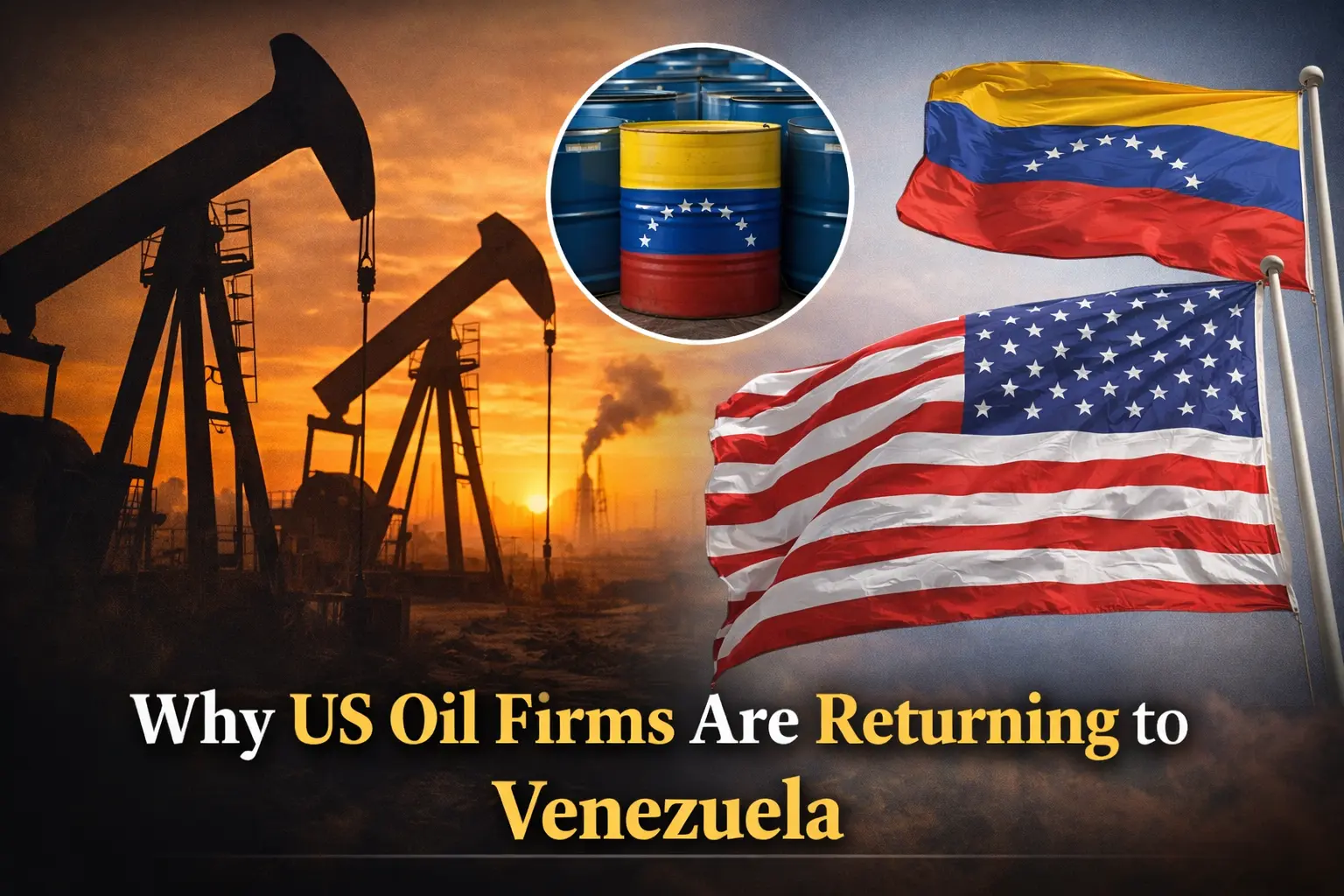
The United States plans a major return to Venezuela’s oil sector following the removal of its longtime leader. Former U.S. President Donald Trump says American oil companies will invest billions to rebuild Venezuela’s broken energy infrastructure. The move could reshape global oil markets, geopolitics, and energy supply.
What Trump Announced
Speaking from Mar-a-Lago in Florida, Trump said major U.S. oil firms would lead efforts to restore Venezuela’s oil production capacity.
According to him, American companies would spend billions repairing damaged refineries, pipelines, and export facilities. He said the aim is to restart oil flows and turn Venezuela’s resources into revenue again.
Trump framed the plan as an economic reset rather than a rescue.
Why This Is Happening Now
The announcement follows the capture of Venezuelan President Nicolás Maduro and his wife, Cilia Flores, during a large U.S. military operation.
Both had been indicted in the United States on drug-trafficking charges. With Maduro removed, Washington says it will assume temporary control while a political transition is arranged.
Trump said the U.S. would “run the country” during this interim period, though details of the governing structure were not disclosed.
Why US Oil Companies Matter
Venezuela has the largest proven oil reserves in the world. Yet years of sanctions, mismanagement, and underinvestment left its oil sector in decline.
U.S. oil firms bring capital, technology, and operational expertise. Many operated in Venezuela before the industry was nationalized in 1976.
Their return signals a shift from isolation to controlled re-entry, even as sanctions technically remain in place.
The Sanctions Question
Despite the investment plans, Trump said the U.S. oil embargo on Venezuela remains active.
Instead of lifting sanctions outright, the plan places the financial burden on American oil companies. They would fund reconstruction upfront and be reimbursed later through production and exports.
This approach allows oil activity to resume without formally ending sanctions.
What This Means for Global Oil Supply
Venezuela’s oil production once reached about 3.5 million barrels per day in the late 1990s. Today, output is estimated at roughly 800,000 barrels per day.
If infrastructure repairs succeed, production could rise sharply over time. That would add new supply to global markets already sensitive to geopolitical shocks.
More Venezuelan oil could ease price pressures, especially for countries seeking alternatives to Middle Eastern or Russian supply.
OPEC, China, and Russia Angle
Venezuela is a founding member of OPEC and has long been part of global oil politics.
China and Russia still have stakes in Venezuela’s oil sector through joint ventures approved before Maduro’s removal. Their presence complicates U.S. plans and could trigger quiet power struggles over influence and contracts.
Any expansion of U.S. control may shift the balance inside OPEC and reduce rival leverage in the region.
Why This Matters Beyond Venezuela
This is not just about oil. It reflects how energy security, military power, and foreign policy are increasingly intertwined.
By tying political change directly to energy investment, the U.S. is signaling that control of supply chains remains central to global influence.
Other oil-producing nations are watching closely.
The Bigger Picture
If successful, U.S. oil firms could revive one of the world’s richest energy sectors after decades of decline. If mismanaged, the plan could deepen instability and fuel new international disputes.
What happens next will shape oil prices, diplomatic alliances, and the future of Venezuela itself.
For now, one thing is clear: Venezuela’s oil is back at the center of global power politics.