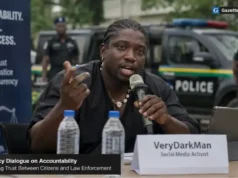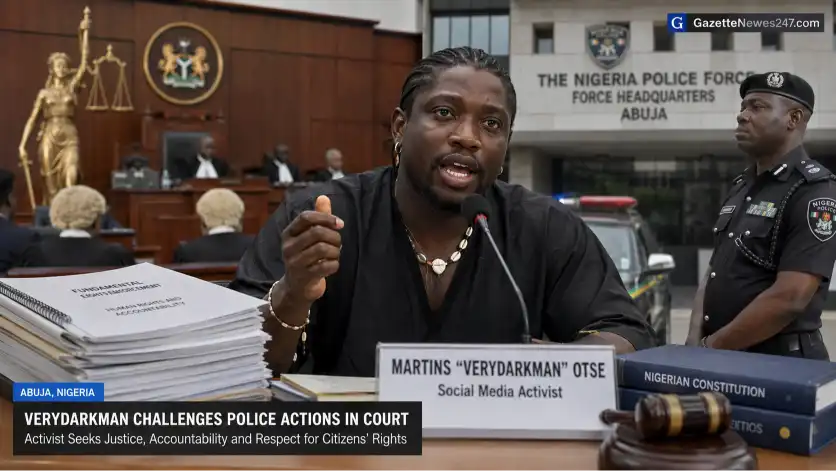
Social media activist Martins Otse, popularly known as VeryDarkMan, has challenged the Nigeria Police Force to charge him to court over his allegations that some security personnel aid kidnapping and other forms of insecurity in Nigeria.
Ongoing reports indicate that Otse made the comments on Thursday, August 27, after the police invited him to provide evidence supporting his earlier allegation that some officers at highway checkpoints identify travellers and allegedly pass information to kidnappers.
The controversy has now moved beyond the original question of whether his allegations are true. A new question is emerging: Why does VeryDarkMan want to present his evidence in court rather than directly to the police?
What did VeryDarkMan say?
Responding to the police invitation, Otse said he was willing to face the authorities but would prefer any evidence he has to be presented in court.
He challenged the police to prosecute him if they believed he had committed an offence and said his lawyers were prepared to defend him.
VeryDarkMan also maintained his broader allegations about insecurity, accusing security institutions of contributing to the problem. These remain allegations by the activist and have not been established by a court.
Why did the police invite him?
The Nigeria Police Force reacted after VeryDarkMan alleged that some officers stationed at checkpoints along major highways identify wealthy travellers and allegedly share information about their movements with kidnappers and bandits.
The police rejected the allegation as unsubstantiated and said it was damaging to an institution responsible for protecting millions of Nigerians.
The Force invited Otse to produce evidence and said any credible evidence of misconduct would be investigated. It also stated that individual officers found guilty of wrongdoing would face disciplinary action and prosecution.
Can the police simply “charge him to court”?
Not automatically.
An invitation to provide evidence is not the same as a criminal charge. For VeryDarkMan to be prosecuted, investigators and relevant prosecuting authorities would need to identify a specific offence supported by evidence and follow the appropriate legal process.
For now, the publicly reported position is that the police have asked him to substantiate his allegations, while he says he would prefer to present evidence in court if a case is brought against him.
What happens next?
There are several possible outcomes:
- VeryDarkMan may honour the police invitation and provide evidence.
- He may appear with his lawyers and formally state his position.
- The police may decide to investigate the allegations independently.
- If authorities believe a criminal offence has been committed, further legal steps could follow.
- If the matter reaches court, any evidence presented would be tested through the judicial process.
The key issue remains whether VeryDarkMan has credible and verifiable evidence supporting his claims. The police say they are ready to investigate such evidence, while the activist insists he would rather tender it in court.
Why this case matters
The dispute comes at a time when kidnapping, banditry and public confidence in Nigeria’s security institutions remain major national concerns.
The case also raises an important question about accountability: How should serious allegations against public institutions be investigated, and what level of evidence should be required before such claims are treated as established facts?
At this stage, the allegations against the police and other security agencies remain unproven. The Nigeria Police Force has denied institutional complicity and asked VeryDarkMan to provide evidence.