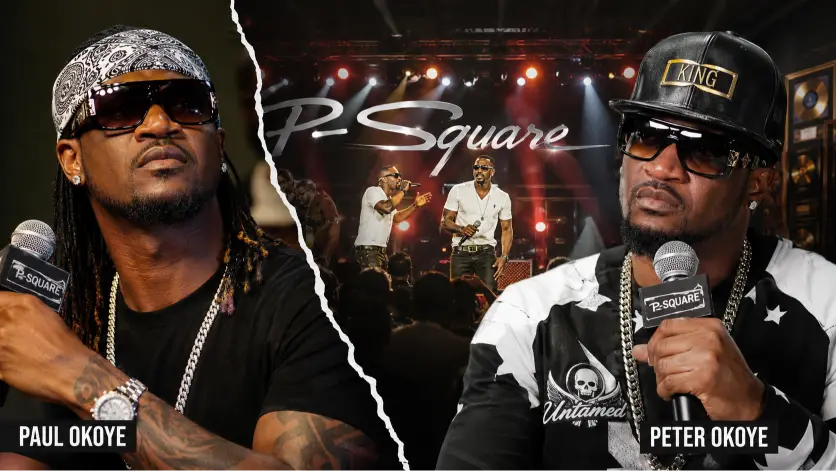
For years, Peter and Paul Okoye were almost impossible to separate in the minds of Nigerian music fans.
As P-Square, the identical twins built one of Africa’s most successful music partnerships. They sang together, danced together, competed on stage and turned their differences into part of the group’s appeal.
But behind the music, disagreements were gradually developing over management, creative decisions, money, recognition and family relationships.
The partnership eventually collapsed in 2017.
Four years later, Peter and Paul reunited, giving fans hope that the most difficult chapter in their relationship had finally ended.
That hope did not last.
By 2024, another major dispute had emerged. This time, the disagreement went beyond music and family arguments. It involved public accusations, questions about songwriting and finances, an Economic and Financial Crimes Commission investigation and legal proceedings involving their elder brother and former manager, Jude Okoye.
So, what actually happened to P-Square?
The answer is more complicated than blaming one person.
How P-Square Started
Peter and Paul Okoye grew up together in Jos and developed an interest in music and performance from an early age.
They participated in school music and drama activities and later performed with other young musicians before eventually establishing themselves as a duo.
Their partnership worked because the twins brought different strengths to the group.
Peter became strongly associated with dancing, stage performance and visual concepts, while Paul became known for songwriting, singing and musical composition.
Rather than allowing those differences to separate them, they initially turned them into an advantage.
The result was P-Square.
The twins developed a distinctive performance style that combined music, choreography and dance. Their popularity grew through albums including Get Squared and Game Over, while songs such as “Do Me”, “Beautiful Onyinye”, “Danger”, “Personally” and “Chop My Money” helped establish their reputation across Africa.
By 2015, MTV Africa had named P-Square Artist of the Decade.
At the height of their success, their biggest strength was also their identity: they were better known as P-Square than as Peter and Paul individually.
Was Their Competition Always a Problem?
Not necessarily.
Competition was actually part of what made P-Square entertaining.
The brothers could challenge each other during performances and use their individual abilities to push the other to perform better.
For fans, the rivalry looked playful.
One brother would introduce a move and the other would respond. Their different personalities created an entertaining balance on stage.
But competition becomes more complicated when the issue changes from performance to ownership.
Instead of asking who could dance better or entertain an audience, disagreements began to involve questions such as who contributed more to the music, who deserved credit and who should control decisions.
That shift would become important in the later P-Square disputes.
Where Did the First Major Conflict Come From?
The first major public signs of trouble emerged around 2016.
A major point of tension involved their elder brother, Jude Okoye, who was managing P-Square.
Peter became increasingly unhappy with Jude’s role and publicly announced that he had been removed as manager.
Paul did not appear to share Peter’s position.
That created a difficult situation because Jude was not simply a business manager.
He was also their elder brother.
A disagreement that might normally have been handled as a business problem therefore became a family problem as well.
The brothers were also dealing with disagreements involving music, business arrangements and personal relationships.
This made it increasingly difficult to separate the P-Square business from the Okoye family.
Why Was the 2017 Breakup So Serious?
By September 2017, the disagreements had reached a point where the P-Square partnership could no longer continue.
Peter announced that he was leaving the group and later took steps to end his involvement in the partnership.
The dispute had become deeply personal.
Peter raised concerns about his brother’s willingness to cooperate with him and also discussed issues involving his wife, Lola Omotayo, and their children.
He also made serious allegations involving Jude.
Those allegations were disputed and should not automatically be treated as established facts.
What they demonstrated, however, was how far the disagreement had moved from music.
P-Square was no longer simply dealing with a disagreement between two performers.
The dispute now involved spouses, children and other members of the family.
That made reconciliation much harder.
Did the Wives Cause the P-Square Breakup?
This is one of the simplest explanations often attached to the P-Square feud, but the story is more complicated.
Peter’s marriage to Lola Omotayo and Paul’s marriage to Anita Okoye became part of the public narrative surrounding the brothers’ disagreements.
As tensions increased, reports and public discussions increasingly focused on the role of the wives.
But the available account does not support the idea that the wives alone caused P-Square’s collapse.
The disagreements also involved management, creative decisions, business arrangements and family relationships.
Reducing the entire feud to Peter’s wife or Paul’s wife therefore misses much of what was happening between the brothers themselves.
The wives became part of the wider conflict, but the underlying problems were broader.
What Happened After P-Square Split?
After the 2017 breakup, the twins pursued separate careers.
Peter became Mr P, while Paul continued his career as Rudeboy.
Both remained active in music, but the separation meant that the P-Square brand itself was gone.
For fans who had grown up watching the twins perform together, the split was difficult to accept.
P-Square had been built around the idea of two brothers functioning as one musical act.
Seeing them operate separately therefore represented more than the breakup of another music group.
It was the separation of a partnership that had become part of Nigerian pop culture.
Why Did Peter and Paul Reconcile in 2021?
After about four years apart, Peter and Paul reconciled in November 2021.
The reunion was significant because it appeared to show that their relationship had survived the most damaging period of their feud.
The twins reunited publicly, celebrated their 40th birthday together and returned to performing as P-Square.
For fans, it seemed that the long-running family and business dispute had finally been resolved.
But the reconciliation did not permanently settle every underlying disagreement.
Why Did P-Square Break Up Again?
The conflict returned in 2024.
This time, one of the most visible disputes involved recognition and songwriting contributions.
Paul made claims about his contribution to P-Square’s music, including saying that he wrote 99 per cent of the group’s songs.
Peter publicly challenged that claim.
He pointed to his own contributions and argued that his role in the group’s music and success should not be erased.
On the surface, this appeared to be a dispute about songwriting.
But for two brothers who had spent decades building a single identity, the argument carried a deeper meaning.
It raised a difficult question:
Who actually created P-Square?
Was the group primarily Paul’s songwriting?
Was Peter’s performance and creative contribution equally important?
Or was P-Square successful precisely because both brothers combined different abilities?
Those questions are difficult to answer because the group was built around collaboration.
Why Did Money Become Part of the Feud?
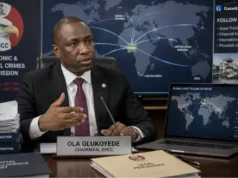
The dispute later moved into more serious territory when Peter petitioned the EFCC over alleged financial misconduct involving Jude and matters connected to P-Square’s business.
The allegations included issues involving money, bank accounts and Northside Entertainment.
Jude denied wrongdoing and faced legal proceedings connected to the allegations.
In March 2025, a Lagos court granted Jude bail after he was arraigned over allegations involving approximately $1 million and other sums.
However, allegations should not be confused with proof of guilt.
The financial dispute subsequently became even more complicated.
In December 2025, the EFCC told the court that it did not have evidence supporting Peter’s specific allegation that Jude and Paul had fraudulently withdrawn $800,000.
That development is important because it shows why the financial allegations surrounding the P-Square dispute must be treated carefully.
An investigation or allegation does not automatically establish that wrongdoing occurred.
How Did Paul Become Involved in the EFCC Dispute?
The conflict took another unexpected turn in 2026.
Peter had publicly challenged anyone to produce evidence that he had filed a petition against his twin brother Paul.
Documents later reported in June 2026 indicated that a January 2024 petition by Peter had asked the EFCC to investigate Paul’s account dating back to 2004.
That revelation added another layer to the dispute.
The disagreement was no longer limited to public arguments about music or family matters.
Questions about money and accountability had become part of an official investigation.
This is also why the P-Square story has become increasingly difficult to explain as a simple sibling quarrel.
So, What Really Caused the P-Square Feud?
There is no single confirmed answer.
Several factors appear throughout the history of the dispute.
1. Management disagreements
Jude Okoye’s position as both elder brother and manager created a complicated relationship between family loyalty and business decisions.
2. Creative differences
Peter and Paul eventually disagreed publicly over music, songwriting and their individual contributions to P-Square.
3. Recognition
As the group became more successful, individual credit became increasingly important.
Arguments over who wrote songs or contributed ideas were therefore also arguments over who deserved recognition for the group’s success.
4. Family tensions
Their marriages, children and other relatives became part of the public conflict.
This made the disagreements much more personal.
5. Financial questions
Later allegations involving money and business accounts pushed the dispute into a more serious legal and regulatory environment.
6. Public pressure
Because the brothers’ disagreements repeatedly played out publicly, every new accusation created pressure for the other side to respond.
A private family disagreement became a public story involving millions of fans.
Why Is It Difficult for Them to Reconcile?
Reconciliation between siblings is already complicated.
In the P-Square case, the difficulty is multiplied because the relationship also involves business.
Peter and Paul are not simply brothers who had an argument.
They were business partners, musical collaborators and the two people behind a hugely valuable entertainment brand.
That means a disagreement about family can affect business.
A business dispute can damage a family relationship.
And a disagreement about creative credit can become a dispute about personal identity.
The boundaries are extremely difficult to maintain.
Did Fame Change Their Relationship?
Possibly, but the available account does not establish that fame alone caused the feud.
What is clear is that success created more things to disagree about.
When P-Square was a small musical project, decisions were relatively simple.
As the group became an international brand, there were managers, businesses, money, recording decisions, performances, families and individual careers to consider.
The more successful the partnership became, the more complicated the partnership also became.
Why the P-Square Story Is Bigger Than a Celebrity Feud
It is easy to treat the conflict as entertainment because Peter and Paul are famous musicians.
But their story raises questions that apply to many family businesses and creative partnerships.
What happens when family members work together?
How do they separate personal relationships from business decisions?
How should creative contributions be recognised?
Who controls a family business when several relatives are involved?
And what happens when trust disappears?
These questions are particularly important because P-Square was built on a relationship that existed long before the music business.
Peter and Paul were brothers before they were celebrities.
That made their success extraordinary.
It also made their disagreements more difficult to resolve.
Why Their 2021 Reunion Was Not Enough
The 2021 reconciliation demonstrated that the relationship could be repaired, at least temporarily.
But the later return of the dispute suggests that reconciliation alone does not necessarily resolve the issues underneath a conflict.
A public reunion can bring people back together.
It does not automatically settle disagreements about money, management, creative ownership or trust.
For a lasting resolution, those underlying issues would also have to be addressed.
That appears to be the difficult part of the P-Square story.
The Real Problem May Be Trust
When all the different stages of the feud are placed together, one theme becomes particularly important: trust.
Management disagreements can be negotiated.
Songwriting credits can potentially be documented.
Business arrangements can be reviewed.
Financial questions can be investigated.
But once siblings begin to question each other’s intentions, every other disagreement becomes harder to resolve.
A decision that once looked ordinary can later be interpreted as evidence of betrayal.
An argument over money can become an argument over loyalty.
A disagreement over a song can become an argument over who sacrificed more.
That is what makes family-business disputes so difficult.
What Happens Next for P-Square?
The future of P-Square remains uncertain.
The brothers have already demonstrated that reconciliation is possible. Their 2021 reunion proved that the relationship can move from a bitter public split to a renewed partnership.
But their subsequent conflict also showed that returning to the stage together does not necessarily eliminate the problems that caused the original disagreements.
For P-Square to return permanently, the issues surrounding trust, business, creative recognition and family relationships would likely need to be resolved beyond the public spotlight.
Until that happens, another reunion cannot necessarily be assumed to mean that the underlying dispute has disappeared.
Frequently Asked Questions
Why did P-Square break up?
P-Square’s breakup followed years of disagreements involving management, creative decisions, business matters, recognition and family relationships. The first major split occurred in 2017.
Who are the members of P-Square?
P-Square consists of identical twin brothers Peter Okoye and Paul Okoye.
When did P-Square reunite?
Peter and Paul reunited in November 2021 after about four years apart.
Why did P-Square break up again?
The brothers’ dispute returned publicly in 2024, with disagreements involving songwriting contributions, recognition and other issues.
Did Peter and Paul fight over their wives?
Their marriages became part of the public narrative surrounding the feud, but the dispute cannot be attributed solely to their wives. Management, music, business and family issues were also involved.
What happened to Jude Okoye?
Jude Okoye, the twins’ elder brother and former manager, became involved in legal and financial disputes connected to P-Square. He denied wrongdoing in relation to the allegations against him.
Did Peter report Paul to the EFCC?
Documents reported in 2026 indicated that Peter had submitted a 2024 petition asking the EFCC to investigate Paul’s account dating back to 2004.
Is P-Square still together?
The source material does not establish a permanent reunion following the later disputes. The group’s future therefore remains uncertain.
Conclusion
The P-Square story cannot be explained simply as two brothers who stopped getting along.
Peter and Paul built their careers together from childhood, turned their differences into one of Nigeria’s most successful musical partnerships and created a brand that became bigger than either individual.
But the same closeness that made their partnership powerful also made their disagreements difficult to contain.
Management became a family issue.
Creative disagreements became arguments about recognition.
Business questions became financial disputes.
Personal tensions became public controversies.
And eventually, matters reached the EFCC and the courts.
Their 2021 reunion showed that the bond between the twins could survive years of conflict. Their later dispute showed that reconciliation without resolving deeper disagreements may not be enough.
That is why the P-Square saga remains unfinished.
It is not simply a story about the breakup of a music group.
It is a story about two brothers trying to balance family, fame, money, creativity, business and individual identity after spending much of their lives being known as one.